Eligibility for Solar Panels and Batteries in South Australia
Are you ready to lower your electricity costs and take control of your energy future? Solar panels and battery systems are empowering South Australians to achieve energy independence while significantly reducing their environmental impact. By making the switch, you can enjoy reduced energy bills, increased home value, and a cleaner, greener lifestyle.
Discover if your home is suitable for solar and explore the amazing benefits of renewable energy. Our expert team is here to guide you every step of the way, offering tailored solutions to meet your unique energy needs. Start your journey to a smarter, more sustainable future today!
Discover if your home is suitable for solar and explore the amazing benefits of renewable energy. Our expert team is here to guide you every step of the way, offering tailored solutions to meet your unique energy needs. Start your journey to a smarter, more sustainable future today!
Eligibility for Solar Panels and Batteries in South Australia
Determining whether your home can host a solar panel system and battery storage depends on several key factors. Here’s a comprehensive checklist to guide you:
1. Roof Condition & Size
To install the best solar systems in South Australia, your home's roof must meet these criteria:
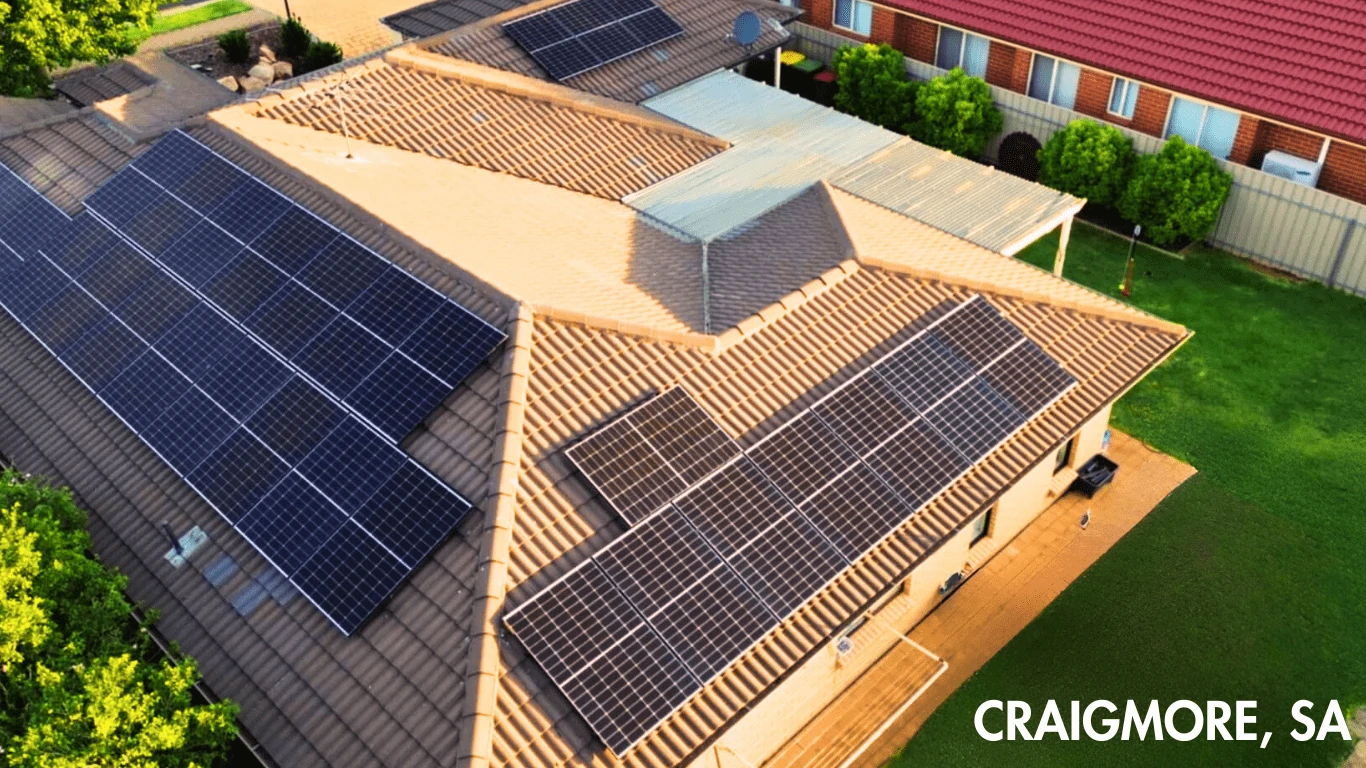
Structural Integrity – Your roof must support solar panels safely and handle their weight over time.Space & Orientation – A sufficiently large and flat roof, ideally facing north, east, or west, is perfect for maximum energy production.
Structural Integrity – Your roof must support solar panels safely and handle their weight over time.Space & Orientation – A sufficiently large and flat roof, ideally facing north, east, or west, is perfect for maximum energy production.
2. Sunlight Exposure
Optimal sunlight is the foundation of any solar system:
Panels should be placed to receive direct sunlight from 9 am to 3 pm.Avoid significant shading from trees, chimneys, or nearby structures, as it can reduce efficiency.
Panels should be placed to receive direct sunlight from 9 am to 3 pm.Avoid significant shading from trees, chimneys, or nearby structures, as it can reduce efficiency.
3. Energy Consumption Patterns
Your household's energy habits will influence the size and type of solar panel and battery system you need:
An energy assessment can identify your usage patterns and uncover potential savings.A solar system with battery storage is ideal for reducing reliance on grid power during peak times or at night.
An energy assessment can identify your usage patterns and uncover potential savings.A solar system with battery storage is ideal for reducing reliance on grid power during peak times or at night.
4. Network and metering requirements in South Australia
Two things are required in South Australia that catch a lot of people by surprise. We handle both as part of your installation, but it's worth understanding them.
A smart meter: Your existing meter may need to be replaced before your system can be connected. This is arranged through your electricity retailer, and it's one of the more common causes of delay between installation and switch-on.
Flexible Exports: Since 1 July 2023, all new solar installations in South Australia must support Flexible Exports, and this now applies across the whole state including rural SWER lines. Instead of a fixed export limit, your system's export cap adjusts automatically depending on how much solar the local network is carrying at that moment — typically allowing up to 10 kW per phase, and reducing toward zero at times when the network is congested.
In practice, most customers export more energy under Flexible Exports than they would under the fixed limit that applies to systems without it. It requires a compatible inverter and an internet connection so your system can receive the network signal.
What this means for you: Because your exports can be limited at exactly the times your panels produce most, the energy you use or store yourself is worth considerably more than the energy you send to the grid. This is one of the main reasons battery storage has become the sensible next step for South Australian homes, rather than simply adding more panels.
We manage the SA Power Networks application and approval process for you.
A smart meter: Your existing meter may need to be replaced before your system can be connected. This is arranged through your electricity retailer, and it's one of the more common causes of delay between installation and switch-on.
Flexible Exports: Since 1 July 2023, all new solar installations in South Australia must support Flexible Exports, and this now applies across the whole state including rural SWER lines. Instead of a fixed export limit, your system's export cap adjusts automatically depending on how much solar the local network is carrying at that moment — typically allowing up to 10 kW per phase, and reducing toward zero at times when the network is congested.
In practice, most customers export more energy under Flexible Exports than they would under the fixed limit that applies to systems without it. It requires a compatible inverter and an internet connection so your system can receive the network signal.
What this means for you: Because your exports can be limited at exactly the times your panels produce most, the energy you use or store yourself is worth considerably more than the energy you send to the grid. This is one of the main reasons battery storage has become the sensible next step for South Australian homes, rather than simply adding more panels.
We manage the SA Power Networks application and approval process for you.
5. Is your home suitable for a battery?
Battery suitability is a different question from roof suitability, and there are a few things we check:
Somewhere safe to put it: Australian Standards restrict where batteries can be installed. They can't go in habitable rooms, ceiling spaces, or under stairways and access ways, and they need specified clearances from windows, doors and appliances. A garage wall, an external wall or a dedicated enclosure is usually the answer. We'll identify the location during your site assessment.
Temperature: Batteries lose capacity and cycle life if they're regularly cooked. West-facing metal garages and unshaded outdoor walls need thought — sometimes the obvious spot isn't the right one.
Your switchboard: Older switchboards often need upgrading before a battery can be connected, particularly if there's no room for additional circuit protection or the board is a legacy type. This is a common and avoidable surprise, so we check it up front and include any upgrade in your quote rather than raising it on installation day.
Whether you want blackout backup: A battery does not automatically keep your house running in a power cut — that needs additional equipment and some design decisions. There are two approaches. The common one is essential circuits backup, covering lights, the fridge, internet and selected power points. Whole-home backup is also achievable, with enough battery capacity and inverter output. We can also configure your system so your solar keeps recharging the battery during an extended outage, which matters on rural properties where outages run longer. Tell us early if backup is important — it's far easier to design in than to retrofit.
Single or three phase: This affects which batteries suit your home and how backup can be configured.
Existing solar: If you already have panels, we'll check whether your current inverter can work with a battery or whether a different approach makes more sense. Either way, having existing solar does not rule you out.
Somewhere safe to put it: Australian Standards restrict where batteries can be installed. They can't go in habitable rooms, ceiling spaces, or under stairways and access ways, and they need specified clearances from windows, doors and appliances. A garage wall, an external wall or a dedicated enclosure is usually the answer. We'll identify the location during your site assessment.
Temperature: Batteries lose capacity and cycle life if they're regularly cooked. West-facing metal garages and unshaded outdoor walls need thought — sometimes the obvious spot isn't the right one.
Your switchboard: Older switchboards often need upgrading before a battery can be connected, particularly if there's no room for additional circuit protection or the board is a legacy type. This is a common and avoidable surprise, so we check it up front and include any upgrade in your quote rather than raising it on installation day.
Whether you want blackout backup: A battery does not automatically keep your house running in a power cut — that needs additional equipment and some design decisions. There are two approaches. The common one is essential circuits backup, covering lights, the fridge, internet and selected power points. Whole-home backup is also achievable, with enough battery capacity and inverter output. We can also configure your system so your solar keeps recharging the battery during an extended outage, which matters on rural properties where outages run longer. Tell us early if backup is important — it's far easier to design in than to retrofit.
Single or three phase: This affects which batteries suit your home and how backup can be configured.
Existing solar: If you already have panels, we'll check whether your current inverter can work with a battery or whether a different approach makes more sense. Either way, having existing solar does not rule you out.
Want to know if your home is suited for solar panels and batteries?
Fill out our Free Solar Eligibility Assessment Form below and take the first step toward a greener, more cost-effective future.
Benefits of Solar Panels and Batteries in South Australia
South Australia leads the country in renewable energy adoption. Here’s why making the switch could be one of the best decisions for your home:
1. Savings on Electricity Bills
Homes equipped with a 6.6 kW solar system can generate around 28 kWh of clean electricity daily on average (across a year in the Adelaide region — actual output varies with season, roof orientation and shading). With excess energy fed back into the grid at solar feed-in tariff rates, you’ll save considerably on your electricity bills.
2. Government incentives available in South Australia
- There are two federal incentives that reduce what you pay upfront, and one ongoing payment that works differently. It's worth understanding the difference.
- Reduces your upfront cost:
- Small-scale Technology Certificates (STCs) — eligible solar systems earn certificates that we apply as a discount on your system price. The number of certificates reduces every January until the scheme ends in 2030.
- The Cheaper Home Batteries Program — a federal discount on eligible home batteries, also applied upfront. This one steps down every January and July.
- Together these can take a substantial amount off the installed price, and we calculate the exact figure for your system as part of your quote.
- Paid to you over time:
- Feed-in tariffs — your retailer pays you for surplus energy you export to the grid. This does not reduce your installation cost. South Australia has no minimum rate, most retailers currently pay between 5 and 8 cents per kWh, and many cap how much you can export at that rate each day.
- Because export rates are modest and network charges can apply to daytime exports, the electricity you use yourself is worth considerably more than the electricity you send back. We size your system around how you actually use power, not around maximising exports.
3. Clean Energy and Environmental Impact
- Solar systems allow South Australian homeowners to:
- Reduce their reliance on fossil fuels.
- Lower their carbon footprint and contribute to fighting climate change.
4. Energy Freedom with Battery Storage
- Local energy independence is achievable with a paired battery system:
- Store excess energy generated during the day for nighttime use.
- Enjoy reliable power even during outages, ensuring your home stays operational when needed most.
5. Adelaide and Regional Solar Advantages
South Australia’s sunny climate makes it ideal for solar systems. Whether you’re in Adelaide or other areas, you can expect optimal energy generation and impressive long-term savings.
Common Questions About Solar Systems in South Australia
What are the government incentives for solar panels in South Australia?
Two federal programs reduce what you pay upfront: Small-scale Technology Certificates for solar, and the Cheaper Home Batteries Program for battery storage. Both are applied as a discount on your system price, and both reduce on a published timetable — so the longer you wait, the less they're worth.
Feed-in tariffs are separate: They're an ongoing payment from your retailer for surplus energy you export, not a reduction in your installation cost. South Australia has no minimum rate.
See our "Rebates & Incentives Explained" page for the current detail.
Feed-in tariffs are separate: They're an ongoing payment from your retailer for surplus energy you export, not a reduction in your installation cost. South Australia has no minimum rate.
See our "Rebates & Incentives Explained" page for the current detail.
Why should I consider adding battery storage to my solar system?
Batteries allow you to store excess energy for use during peak hours or at night, reducing dependence on the grid and saving money long-term.
How do I know if my roof is suitable for solar panels?
Your roof should be large, unobstructed, and structurally sound. A solar installer can assess its condition, orientation, and shading to ensure it's a suitable foundation for solar panels.
What is the installation process like for a solar system?
The process involves:
- A site assessment covering your roof, switchboard and existing meter.
- System design based on how you actually use power, from your recent bill.
- Application to SA Power Networks for connection and export approval, which we handle for you.
- Installation by a licensed electrician accredited under the Solar Accreditation Australia (SAA) scheme. This isn't just a credential — your system must be installed by an accredited person to be eligible for government incentives.
- Smart meter configuration, arranged through your electricity retailer.
- Commissioning, testing and handover, including how to monitor your system.
Take control of your energy future today!
Complete our Free Solar Application Form below and discover how solar panels and batteries can transform your home.
Eligibility Form
We collect your name, contact details and property address so we can assess your eligibility and prepare a quote. We'll only use this information for that purpose and to contact you about your enquiry. We don't sell or share your details with third parties for marketing. See our Privacy Policy for how we handle and store your information, and how to request access or deletion.